
Plant Anatomy: Parenchyma Types and Collenchyma (Part 4)
Explore “Parenchyma Types and Collenchyma” in this Plant Anatomy lesson. Part 4 of the five-part series brings together the source material and lesson topics. Use the contents links to find a section, read the notes, and consult the complete original teaching slides below.
Lesson topics
- Types of parenchyma
- Collenchyma
- Collenchyma types
Contents
- Read the original document
- Types of parenchyma
- 4. Chlorenchyma: Parenchyma cells with chlorophyll. Function is photosynthesis. Example: Mesophyll of lea
- Collenchyma
- Collenchyma types
REQUEST THE COMPLETE DOCUMENT ON WHATSAPP
Read the original source document
Plant Anatomy – Part 1 (English): original teaching slides for this study series.
Types of parenchyma
Types of parenchyma Aerenchyma: Parenchyma which contains air in its intercellular spaces. It helps in aeration and buoyancy. Eg: Nymphae and Hydrilla. Storage Parenchyma: Parenchyma stores food materials. Eg: Root and stem tubers. Stellate Parenchyma: Star shaped parenchyma. Eg: Petioles of Banana and Canna.
4. Chlorenchyma: Parenchyma cells with chlorophyll. Function is photosynthesis. Example: Mesophyll of lea
4. Chlorenchyma: Parenchyma cells with chlorophyll. Function is photosynthesis. Example: Mesophyll of leaves. 5. Prosenchyma: Parenchyma cells became elongated, pointed and slightly thick walled. It provides mechanical support.
Collenchyma
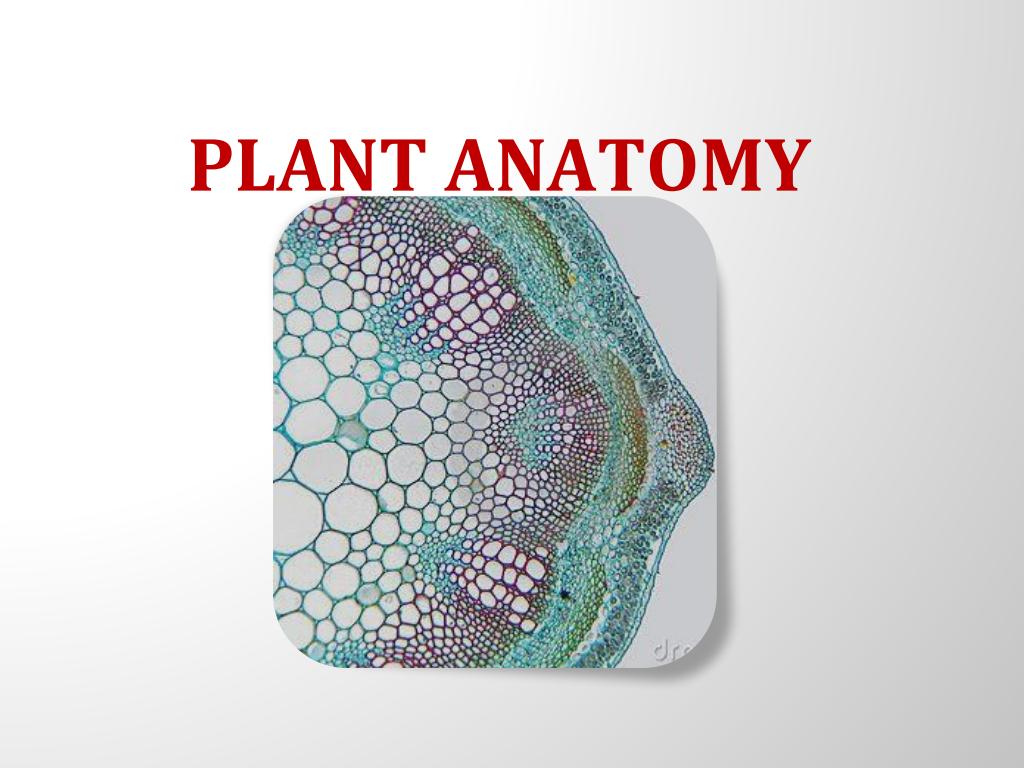
Collenchyma Collenchyma is a simple, living mechanical tissue. Collenchyma generally occurs in hypodermis of dicot stem. It is absent in the roots and also occurs in petioles and pedicels. The cells are elongated and appear polygonal in cross section. The cell wall is unevenly thickened. It contains more of hemicellulose and pectin besides cellulose.
It provides mechanical support and elasticity to the growing parts of the plant.
Collenchyma types
Collenchyma types Angular collenchyma It is the most common type of collenchyma with irregular arrangement and thickening at the angles where cells meets. Eg:Hypodermis of Datura and Nicotiana Lacunar collenchyma The collenchyma cells are irregularly arranged. Cell wall is thickening on the walls bordering intercellular spaces. Eg:Hypodermis of Ipomoea
Review questions and answers
What are the key points about Types of parenchyma?
Types of parenchyma Aerenchyma: Parenchyma which contains air in its intercellular spaces. It helps in aeration and buoyancy. Eg: Nymphae and Hydrilla. Storage Parenchyma: Parenchyma stores food materials. Eg: Root and stem tubers. Stellate Parenchyma: Star shaped parenchyma. Eg: Petioles of Banana and Canna.
What are the key points about 4. Chlorenchyma: Parenchyma cells with chlorophyll. Function is photosynthesis. Example: Mesophyll of lea?
4. Chlorenchyma: Parenchyma cells with chlorophyll. Function is photosynthesis. Example: Mesophyll of leaves. 5. Prosenchyma: Parenchyma cells became elongated, pointed and slightly thick walled. It provides mechanical support.
What are the key points about Collenchyma?
Collenchyma Collenchyma is a simple, living mechanical tissue. Collenchyma generally occurs in hypodermis of dicot stem. It is absent in the roots and also occurs in petioles and pedicels. The cells are elongated and appear polygonal in cross section. The cell wall is unevenly thickened. It contains more of hemicellulose and pectin besides cellulose. It…
What are the key points about Collenchyma types?
Collenchyma types Angular collenchyma It is the most common type of collenchyma with irregular arrangement and thickening at the angles where cells meets. Eg:Hypodermis of Datura and Nicotiana Lacunar collenchyma The collenchyma cells are irregularly arranged. Cell wall is thickening on the walls bordering intercellular spaces. Eg:Hypodermis of Ipomoea
More lessons from this document
- Plant Anatomy – Part 1 (English) — Part 1
- Plant Anatomy – Part 1 (English) — Part 2
- Plant Anatomy – Part 1 (English) — Part 3
- Plant Anatomy – Part 1 (English) — Part 4
- Plant Anatomy – Part 1 (English) — Part 5
Conclusion
The important points in Types of parenchyma should be reviewed alongside the definitions, examples and comparisons given above. Continue with the other four articles to cover the rest of the source material.