
Poultry Feeding: Supplementary Feeding and Feed Formulation (Part 5)
Explore “Supplementary Feeding and Feed Formulation” in this Poultry Feeding lesson. Part 5 of the five-part series brings together the source material and lesson topics. Use the contents links to find a section, read the notes, and consult the complete original teaching slides below.
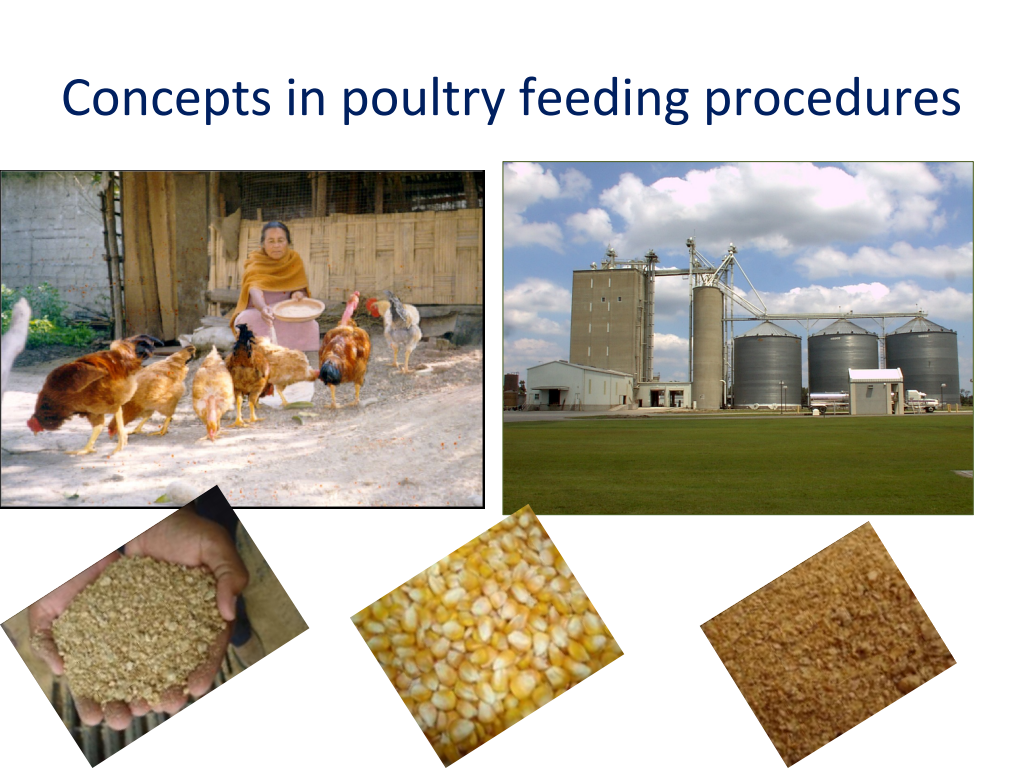
Lesson topics
- Birds are allowed to scavenge along with provision of supplementary feeds
- Intensive production system
- Supplementary Feeding
- Feed Formulation
- Requirement of nutrients
Contents
- Read the original document
- Birds are allowed to scavenge along with provision of supplementary feeds
- Intensive production system
- Supplementary Feeding
- Feed Formulation
- Requirement of nutrients
- Methods of feed formulation
- Hit and trial method
- Least cost formulation
- Conclusions
REQUEST THE COMPLETE DOCUMENT ON WHATSAPP
Read the original source document
Concepts in Poultry Feeding: original teaching slides for this study series.
Birds are allowed to scavenge along with provision of supplementary feeds
Birds are allowed to scavenge along with provision of supplementary feeds Semi-intensive production
Intensive production system
Intensive production system More or less similar to commercial production system
Supplementary Feeding
Supplementary Feeding
Feed Formulation
Feed Formulation Mathematical calculation to prepare a balanced ration Points to be considered Requirement of nutrients Nutrient composition Maximum effective/safe levels of inclusion Availability and cost
Requirement of nutrients
Requirement of nutrients Metabolizable energy Protein and amino acids (lysine, methionine, methionine + cysteine, threonine) Calcium, available P Electrolyte balance (sodium, chlorine) Trace min. Zn, Mn, Fe, Cu, Se Vitamins – A, D3, E, riboflavin etc.
Methods of feed formulation
Methods of feed formulation Algebric equation used when two mixtures are to be combined for arriving at required nutrient concentration – cereal and protein concentrates Pearson square Simple procedure originally devised to blend milk products to a known fat percentage, and can be used for diet formulation too
REQUEST THE COMPLETE DOCUMENT ON WHATSAPP
Hit and trial method
Hit and trial method Traditional way of feed formulation and still widely used by professionals Amount of feed ingredients is changed so as to arrive at required nutrient levels in the feed For this, the ingredients are arbitrarily altered and the nutrient concentration is calculated, which is continued till the desired nutrient level is achieved. Computer applications – MS Excel Ex.2
Least cost formulation
Least cost formulation Is a feed formula that is both nutritionally-complete (within limits) and with a minimum ingredient cost (within limits) Linear-programming Numerous computer software – Ecomix, Winfeed, Myfeed, FeedMu, Feedsoft, Autofeed, Optimix etc.
Conclusions
Conclusions Understand the nutritional needs of bird Intensive system – balanced diet with low cost materials Reduce cost of broiler feed and feeding Nutrients, Formulation, Precise Feeding Control environments to reduce stress & diseases Recommendations: 1.Adopt new technology 2.Benchmark to the leading broiler 3.Always improve Efficiency
Conclusions
Conclusions The nutrient requirements have to be regularly updated for precision and economical feeding The additive effects of the additive’s should be quantified in terms of nutrient values to help in formulation The efficiency of the digestion is being constantly targeted and upgraded The metabolism which is the major waster should be targeted hence future works should be at the cellular level
Review questions and answers
What are the key points about Birds are allowed to scavenge along with provision of supplementary feeds?
Birds are allowed to scavenge along with provision of supplementary feeds Semi-intensive production
What are the key points about Intensive production system?
Intensive production system More or less similar to commercial production system
What are the key points about Feed Formulation?
Feed Formulation Mathematical calculation to prepare a balanced ration Points to be considered Requirement of nutrients Nutrient composition Maximum effective/safe levels of inclusion Availability and cost
What are the key points about Requirement of nutrients?
Requirement of nutrients Metabolizable energy Protein and amino acids (lysine, methionine, methionine + cysteine, threonine) Calcium, available P Electrolyte balance (sodium, chlorine) Trace min. Zn, Mn, Fe, Cu, Se Vitamins – A, D3, E, riboflavin etc.
What are the key points about Methods of feed formulation?
Methods of feed formulation Algebric equation used when two mixtures are to be combined for arriving at required nutrient concentration – cereal and protein concentrates Pearson square Simple procedure originally devised to blend milk products to a known fat percentage, and can be used for diet formulation too
More lessons from this document
- Concepts in Poultry Feeding — Part 1
- Concepts in Poultry Feeding — Part 2
- Concepts in Poultry Feeding — Part 3
- Concepts in Poultry Feeding — Part 4
- Concepts in Poultry Feeding — Part 5
Conclusion
The important points in Intensive production system should be reviewed alongside the definitions, examples and comparisons given above. Continue with the other four articles to cover the rest of the source material.