
Poultry Preparation, Grade 10: Poultry Preparation Revision Questions (Part 5)
Explore “Poultry Preparation Revision Questions” in this Poultry Preparation, Grade 10 lesson. Part 5 of the five-part series brings together the source material and lesson topics. Use the contents links to find a section, read the notes, and consult the complete original teaching slides below.
Lesson topics
- EXAM TIME!
- Identify the following:
- 6. They are marketed either fresh or frozen.
- Enumeration:
- Split breast 6. whole chicken
Contents
- Read the original document
- EXAM TIME!
- Identify the following:
- 6. They are marketed either fresh or frozen.
- Enumeration:
- Split breast 6. whole chicken
- 1-5: Possible answers
- 6-7: Correct Answers
- 11-15: Possible answers
REQUEST THE COMPLETE DOCUMENT ON WHATSAPP
Read the original source document
Poultry Production – Grade 10: original teaching slides for this study series.
EXAM TIME!
EXAM TIME!.
Identify the following:
Identify the following: A breast quarter with the wing removed. A breast quarter with wing and back portion removed. The portion between the knee joint and the hock. the portion of the leg above the knee joint. The section between the elbow and the tip.
6. They are marketed either fresh or frozen.
6. They are marketed either fresh or frozen. 7. Split breast that has been skinned and deboned. 8. The first section between the shoulder and the elbow. 9. It includes heart, liver, and neck. 10. Whole chicken leg with skin and bone removed.
Enumeration:
Enumeration: 1-5: Give at least 5 (five) poultry birds that can be eaten. 6-8: Give the 3 (three) types of food contamination. 9-10: Give the two methods of cooking poultry dish. 11-15: Give at least 5 (five) ways on how plate your poultry dish.
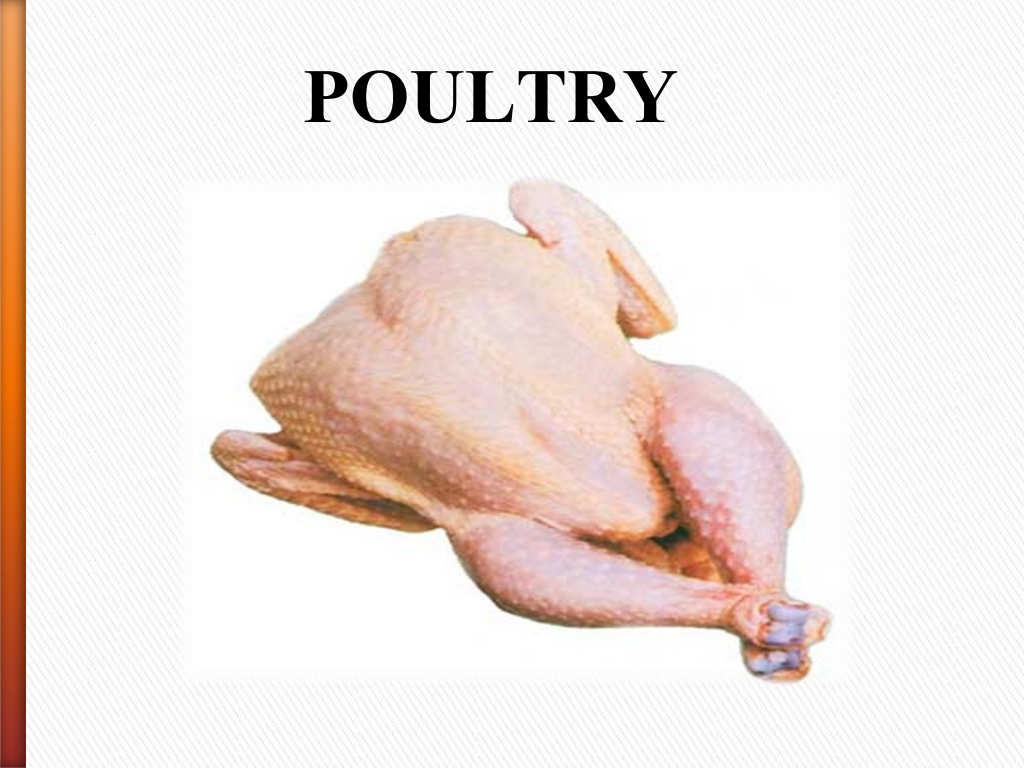
Split breast 6. whole chicken
Split breast 6. whole chicken Split breast without back 7. Boneless, breast Drumstick 8. Wing Drummettes Thigh 9. Giblets Wing mid section 10. BoneleChickeleg Whole Chicken Boneless, Chicken breast Wing Drummettes Boneless, Chicken leg
1-5: Possible answers
1-5: Possible answers Patridges
6-7: Correct Answers
6-7: Correct Answers Moist heat cooking method Dry heat cooking method 8-10: Correct Answers Biological contamination Physical contamination Cross contamination
11-15: Possible answers
11-15: Possible answers Avoid a monochromatic color scheme Bring out vegetables' brightest colors Cook fried foods carefully Experiment with interesting shapes Visualize the finished plate Limit portion sizes Use sauce wisely
Review questions and answers
What are the key points about Identify the following:?
Identify the following: A breast quarter with the wing removed. A breast quarter with wing and back portion removed. The portion between the knee joint and the hock. the portion of the leg above the knee joint. The section between the elbow and the tip.
What are the key points about 6. They are marketed either fresh or frozen.?
6. They are marketed either fresh or frozen. 7. Split breast that has been skinned and deboned. 8. The first section between the shoulder and the elbow. 9. It includes heart, liver, and neck. 10. Whole chicken leg with skin and bone removed.
What are the key points about Enumeration:?
Enumeration: 1-5: Give at least 5 (five) poultry birds that can be eaten. 6-8: Give the 3 (three) types of food contamination. 9-10: Give the two methods of cooking poultry dish. 11-15: Give at least 5 (five) ways on how plate your poultry dish.
What are the key points about Split breast 6. whole chicken?
Split breast 6. whole chicken Split breast without back 7. Boneless, breast Drumstick 8. Wing Drummettes Thigh 9. Giblets Wing mid section 10. BoneleChickeleg Whole Chicken Boneless, Chicken breast Wing Drummettes Boneless, Chicken leg
What are the key points about 1-5: Possible answers?
1-5: Possible answers Patridges
More lessons from this document
- Poultry Production – Grade 10 — Part 1
- Poultry Production – Grade 10 — Part 2
- Poultry Production – Grade 10 — Part 3
- Poultry Production – Grade 10 — Part 4
- Poultry Production – Grade 10 — Part 5
Conclusion
The important points in Important Concepts should be reviewed alongside the definitions, examples and comparisons given above. Continue with the other four articles to cover the rest of the source material.